Born on the Roof of the World: Why Himalayan Crystals Are Renowned for Their Exceptional Quality
Discover the extraordinary story of Himalayan crystals - from their formation at extreme altitudes to their exceptional clarity. A journey to some of the world's most sought-after crystals.
by Thomas Pettersson
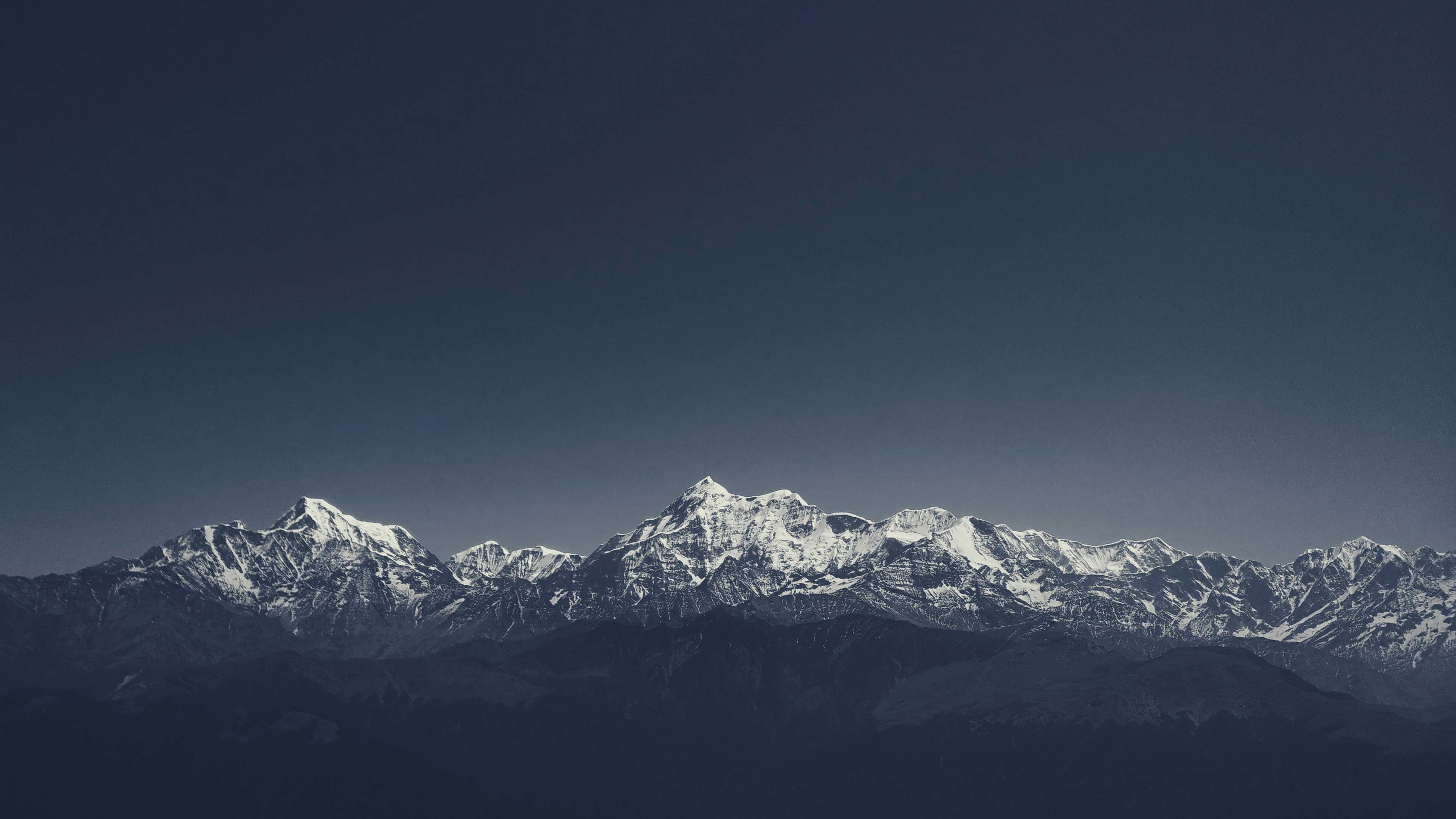
Born on the Roof of the World: Why Himalayan Crystals Are Renowned for Their Exceptional Quality
In our gallery, we are often asked what makes our Himalayan rock crystals so special. The answer lies in a unique combination of extreme altitude, geological history, and pristine environmental conditions. Join us on a journey to the origins of these extraordinary natural treasures.
A Geological Success Story
The story of Himalayan crystals begins approximately 55 million years ago with one of the most dramatic geological events in Earth's history: the collision of two continental plates. When the Indian Plate drifted northward at speeds of up to 18 cm per year and collided with the Eurasian Plate, it not only created the world's highest mountains – it also established the perfect conditions for the formation of exceptionally pure crystals.
This collision, which continues to this day and causes the Himalayan mountain range to grow by about 5 mm annually, created a geological environment of unparalleled complexity. The enormous pressures and temperatures generated by this process led to the formation of fissures and cavities in the rock – the future birthplaces of our crystals.
The Secret of Altitude
What makes extreme altitude so crucial for crystal quality? At elevations of 4,000 to 6,000 meters, where many of the finest crystals are found, conditions exist that are unparalleled on Earth:
Purity Through Isolation
At these extreme heights, far removed from any industrial pollution, crystal formation takes place in an almost pristine environment. The air is thin and pure, environmental contamination is minimal. This isolation over millions of years guarantees that crystals can grow without impurities.
Glacier Water: An Exceptionally Pure Source
The minerals from which crystals form are transported by some of the clearest water found on our planet: glacial meltwater. This water, originating from ancient, compressed ice, is remarkably free from contaminants that are common at lower elevations. It contains an ideal mixture of dissolved minerals to form high-quality quartz crystals.
Slow, Undisturbed Growth
The consistently low temperatures at high altitude significantly slow crystal growth. What might appear to be a disadvantage at first glance is actually the key to exceptional quality: slower growth means fewer defects, clearer structures, and purer crystals. A Himalayan crystal may require hundreds of thousands or even millions of years for its growth – time in which every atom can arrange itself perfectly.
Pakistan: The Mineralogical Treasure Chamber
Pakistan, particularly the regions of Gilgit-Baltistan and areas around Skardu, has established itself as one of the richest sources of high-quality rock crystals. The geological diversity is impressive: here, three of the world's mightiest mountain ranges converge – the Himalayas, Karakoram, and Hindu Kush.
This unique geological constellation has led to extraordinary mineral diversity. The pegmatites of this region, which are only a few million years old (geologically speaking, very young), harbor not only rock crystals of exceptional clarity but also aquamarines, topazes, and many other gemstones. The fact that Pakistan harbors more glacier ice than any other country outside the polar regions underscores the importance of pure glacial water for crystal formation.
In Comparison: What Makes the Difference?
To understand the uniqueness of Himalayan crystals, a comparison with other famous crystal regions is worthwhile:
Brazilian Crystals
Brazil is known for its enormous crystals, but these mostly form at lower elevations under completely different conditions. The tropical environment and different geological processes lead to crystals with different properties – often larger, but not necessarily of the same purity.
Arkansas Quartz
The quartz from Arkansas in the USA is also famous, but forms in a completely different geological environment. They formed in old, stable rock layers without the extreme conditions of the Himalayas.
Alpine Crystals
Crystals from the Alps come closest to Himalayan crystals but form at significantly lower elevations and under less extreme conditions. While Alpine crystals are undoubtedly of high quality, they rarely achieve the clarity and purity of their Himalayan relatives.
The Challenge of Recovery
The extreme conditions that produce these exceptional crystals make their recovery an enormous challenge. The mining season is limited to a few months per year – typically from June to October, depending on elevation. Miners must work at altitudes where the air is thin and weather can be unpredictable.
Transporting crystals from their discovery sites is equally challenging. Many sites are accessible only on foot or with pack animals. Crystals must be carefully transported over steep mountain paths and through difficult terrain – a process that can take weeks and requires the utmost care to avoid damaging the delicate pieces.
What Makes Himalayan Crystals Special
Himalayan crystals are highly valued by collectors and mineral enthusiasts for their exceptional clarity and quality. The unique geological conditions – extreme altitude, pure glacial water, and undisturbed growth over millennia – contribute to crystals with minimal inclusions and remarkably regular crystal lattices.
Particularly notable is the optical clarity of many Himalayan crystals. This "water clarity," as mineral experts call it, results from the optimal growth conditions found at high altitudes – conditions that are rarely replicated elsewhere on Earth.
The Future of Himalayan Crystals
With advancing climate change and glacier retreat, the question arises about the future of these unique crystal deposits. Paradoxically, glacier melting could temporarily expose new discovery sites that have been hidden under ice for millennia. In the long term, however, the loss of glaciers could disrupt the delicate hydrological system necessary for the formation of new crystals.
This makes every Himalayan crystal an even more valuable witness to a unique geological epoch – a window into a time when the world's highest mountains were still young and conditions for the formation of perfect crystals were ideal.
A Legacy in Crystal
The next time you contemplate a Himalayan rock crystal, remember: you are not just holding a beautiful stone. You are holding a piece of Earth's history, shaped under extreme conditions, nourished by pristine glacial water, and formed over time spans that exceed our imagination.
Our crystals from the Himalayas are more than collector's items or decorative objects. They are ambassadors of one of the last untouched regions of our Earth, witnesses to mighty geological forces, and examples of the perfection that nature can achieve when given enough time and the right conditions.
At Celestia, we are proud to share these extraordinary natural treasures with you. Each of our Himalayan rock crystals has been carefully selected and acquired directly from the miners who risk their lives to recover these wonders of nature. If you would like to learn more about our crystals, we cordially invite you to contact us for a personal conversation.